.png)
.png)
.png)


.png) Calcolatrici
CalcolatriciCome sta rispondendo Wattnova alle tendenze relative alle batterie al litio e alle normative UE sull'impronta di carbonio?
Giugno 4, 2026
La transizione energetica globale sta accelerando, e le batterie al litio sono al centro di questa trasformazione. Dai veicoli elettrici (Veicoli elettrici) ai sistemi di accumulo dell’energia (ESS) e veicoli elettrici a bassa velocità come i golf cart, la domanda di batterie agli ioni di litio, soprattutto LiFePO4 (batterie LFP), continua a crescere rapidamente.
Allo stesso tempo, il mercato europeo sta attraversando un cambiamento strutturale guidato dalle politiche di sostenibilità, in particolare per quanto riguarda l’impronta di carbonio, tracciabilità della batteria, e l'imminente regolamento UE sulle batterie.
Per i produttori, distributori, e importatori, non si tratta più solo di prestazioni e prezzo, ma di conformità, trasparenza, e responsabilità ambientale a lungo termine.
Questo articolo esplora tre aspetti chiave:
- -Tendenze future nella tecnologia delle batterie al litio
- -L’importanza dell’impronta di carbonio e dell’etichettatura del carbonio in Europa
- -Come Wattnova sta rispondendo a questi cambiamenti del settore
1. Tendenze future nella tecnologia delle batterie al litio
1.1 Spostamento verso LFP (LiFePO4) Batterie
Una delle tendenze più significative è la rapida adozione delle batterie LFP (Litio Ferro Fosfato).
Rispetto alle batterie NMC, Offerte LFP:
- -Ciclo di vita più lungo (3000–6000 cicli)
- -Maggiore stabilità termica (migliori prestazioni di sicurezza)
- -Costo inferiore grazie all'assenza di cobalto e nichel
- -Una filiera più rispettosa dell’ambiente
Questi vantaggi rendono LFP la scelta preferita per:
- -Golf cart e veicoli elettrici a bassa velocità
- -Sistemi di accumulo dell'energia (ESS)
- -Applicazioni commerciali e industriali
| Caratteristica | Batteria LFP | Batteria NMC |
|---|---|---|
| Ciclo di vita | 3,000–6.000 cicli | 1,000–2.500 cicli |
| Sicurezza | Eccellente stabilità termica | Maggiore rischio di fuga termica |
| Costo | Inferiore | Più alto |
| Cobalto/Nichel | Non richiesto | Necessario |
| Impatto ambientale | Inferiore | Più alto |
| Applicazioni tipiche | Carrelli da golf, ESS, veicoli commerciali | Veicoli elettrici per passeggeri |
1.2 Le prestazioni di scarica elevate diventano fondamentali
In applicazioni come i golf cart elettrici, carrelli elevatori, e veicoli commerciali, elevata velocità di scarico (Tasso C) sta diventando un elemento chiave di differenziazione.
I clienti richiedono sempre più:
- –Forte accelerazione
- –Tensione stabile sotto carico
- –Prestazioni affidabili su pendii e condizioni gravose
Ciò sposta l’attenzione dalla “capacità”. (Ah)" A:
- –Capacità di scarico
- –Stabilità della tensione (abbassamento di bassa tensione)
- –Sistema di gestione della batteria (BMS) prestazione
1.3 Integrazione di BMS intelligenti e sistemi di dati
Le moderne batterie al litio non sono più dispositivi passivi di accumulo di energia. Con sistemi avanzati di gestione della batteria (BMS), le batterie stanno diventando sistemi intelligenti capaci di:
- ✔ Monitoraggio in tempo reale (voltaggio, temperatura, attuale)
- ✔ Diagnostica remota
- ✔ Manutenzione predittiva
- ✔ Tracciamento dei dati per la gestione del ciclo di vita
Questa tendenza è direttamente collegata ai requisiti normativi in Europa, soprattutto il prossimo passaporto della batteria.
2. Impronta di carbonio ed etichettatura del carbonio nel mercato europeo
2.1 Cos’è l’impronta di carbonio della batteria?
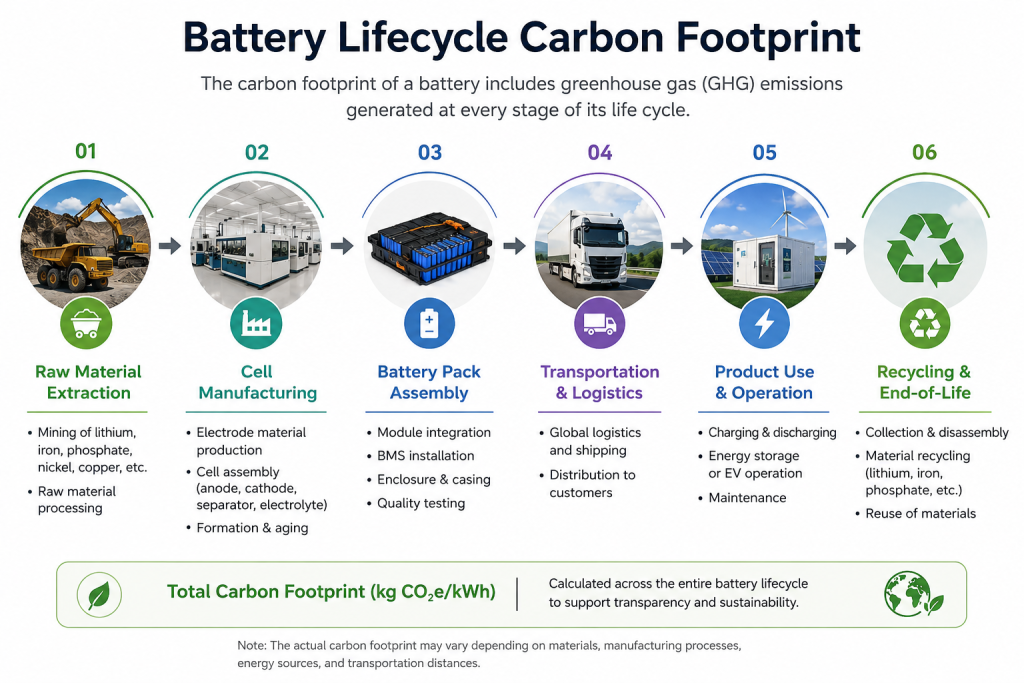
L’impronta di carbonio di una batteria si riferisce al totale dei gas serra (GHG) emissioni generate durante tutto il suo ciclo di vita, compreso:
- -Estrazione della materia prima
- -Produzione di cellule
- -Assemblaggio del pacco
- -Trasporti
- -Riciclaggio a fine vita
In Europa, questo viene misurato in kg CO₂ per kWh.
2.2 Regolamento UE sulle batterie: Un punto di svolta
Il nuovo regolamento UE sulle batterie (Unione Europea) 2023/1542 introduce requisiti severi per le batterie che entrano nel mercato europeo.
I requisiti chiave includono:
- -Dichiarazione obbligatoria dell'impronta di carbonio
- -Introduzione graduale di soglie di impronta di carbonio
- -Passaporto batteria con tracciabilità digitale
- -Livelli minimi di materiali riciclati
- -Regole rigorose di sostenibilità e due diligence
| Requisito | Scopo |
|---|---|
| Dichiarazione sull'impronta di carbonio | Misurare le emissioni della batteria |
| Soglie dell'impronta di carbonio | Limitare le batterie ad alte emissioni |
| Passaporto della batteria | Migliorare la tracciabilità |
| Requisiti dei materiali riciclati | Sostenere l’economia circolare |
| Regole di dovuta diligenza | Garantire un approvvigionamento responsabile |
Per le aziende che esportano in Europa, la conformità non è più facoltativa: è obbligatoria.
2.3 Perché l’etichettatura del carbonio è importante
L’etichettatura del carbonio non è solo un requisito normativo: sta diventando un elemento di differenziazione del mercato. Clienti europei (soprattutto acquirenti B2B) stanno dando sempre più priorità:
- -Prodotti a basse emissioni di carbonio
- -Filiere trasparenti
- -Esg (Ambientale, Sociale, Governo) conformità
In molte gare d'appalto e processi di appalto, i dati sull’impronta di carbonio sono già un fattore decisivo.
3. Come Wattnova risponde ai cambiamenti del settore
| Tendenza del settore | Risposta Wattnova |
|---|---|
| Crescente domanda di LFP | Focus sui sistemi di batterie LiFePO4 |
| Requisiti di scarico più elevati | 1Opzioni di scarico C–3C |
| Normative sull'impronta di carbonio | Preparazione dei dati sul carbonio |
| Requisiti del passaporto della batteria | Disponibilità alla tracciabilità |
| Aspettative di sicurezza | BMS avanzato & gestione termica |
3.1 Focus sulle soluzioni di batterie LFP ad alte prestazioni
Wattnova si concentra sui sistemi di batterie LiFePO4 su misura per:
- -Carrelli da golf
- -Veicoli elettrici a bassa velocità
- -Applicazioni di stoccaggio dell'energia
I principali vantaggi del prodotto includono:
- -Elevato tasso di scarico (1Opzioni C–3C)
- -Uscita di tensione stabile sotto carico pesante
- -Ciclo di vita lungo
- -Ottimizzato per scenari di utilizzo reali
3.2 Preparazione per la conformità al carbonio
Per allinearsi ai requisiti del mercato europeo, Wattnova sta lavorando attivamente:
- -Raccolta e calcolo dei dati sull'impronta di carbonio
- -Trasparenza della catena di fornitura
- -Collaborazione con enti di prova e verifica certificati
- -Predisposizione per i futuri sistemi di passaporto delle batterie
Ciò garantisce che i clienti che importano batterie Wattnova possano soddisfare i prossimi requisiti normativi con fiducia.
3.3 Ottimizzazione strutturale e di sicurezza
Oltre la conformità, Wattnova sottolinea l'affidabilità del prodotto attraverso:
- -Design della struttura interna rinforzata (migliore resistenza alle vibrazioni)
- -BMS avanzato con controllo e protezione precisi della corrente
- -Gestione termica ottimizzata
Queste funzionalità sono particolarmente importanti per:
- -Applicazioni esterne
- -Ambienti di terreno accidentato
- -Condizioni operative a carico elevato
3.4 Approccio ingegneristico orientato al cliente
Wattnova è consapevole che le applicazioni nel mondo reale contano più delle specifiche su carta.
Invece di concentrarti solo su:
- -Capacità nominale (Ah)
Wattnova dà la priorità:
- -Prestazioni di scarico reali
- -Compatibilità del sistema (controllore + motore + batteria)
- -Stabilità operativa a lungo termine
Questo approccio aiuta i clienti a ridurre:
- -Tassi di fallimento
- -Costi di manutenzione
- -Costo totale di proprietà (TCO)
4. Conclusione: Dalla competizione sul prezzo alla competizione sul valore
L’industria delle batterie al litio sta entrando in una nuova fase. Nel passato, la concorrenza è stata guidata da:
- -Prezzo
- -Specifiche di base
Oggi, i principali differenziatori sono:
- -Prestazioni in condizioni reali
- -Impronta di carbonio e sostenibilità
- -Conformità alle normative internazionali
- -Trasparenza e tracciabilità
Per le aziende che mirano al mercato europeo, adattarsi a questi cambiamenti non è facoltativo: è essenziale. Wattnova si impegna a supportare i propri partner attraverso questa transizione fornendo:
- -Soluzioni di batterie LFP ad alte prestazioni
- -Prodotti pronti per la conformità
- -Supporto tecnico e commerciale a lungo termine