.png)
.png)
.png)


.png) Calculatrices
CalculatricesWhy Is Battery Safety Critical in Lithium Energy Systems—and How Does Cell Welding Method Impact It?
juin 24, 2026
As lithium battery systems become the backbone of modern energy solutions—from off-grid solar storage to electric mobility—safety is no longer optional; it is fundamental.
Yet, while most discussions focus on battery capacity, vie de vélo, or price, one critical factor is often overlooked:
How the battery cells are connected internally.
Chez Wattnova, we believe that true battery safety starts from the inside, especially with the cell welding and connection methodology.
⚠️ What Are the Real Risks in Lithium Battery Systems?
Lithium batteries store a large amount of energy in a compact space. When not properly designed, they can pose risks such as:
⚠️ Thermal runaway
⚠️ Internal short circuits
⚠️ Overheating under high load
⚠️ Mechanical failure due to vibration or stress
These risks are significantly amplified in applications such as:
🚙Low-speed electric vehicles
☀️Off-grid solar systems with high load demand
⛵Marine and RV energy systems
In these use cases, high current discharge and unstable operating environments make safety even more critical.
Why Cell Connection Method Matters More Than You Think
Inside every lithium battery pack, individual cells must be connected to form a complete system. This connection is typically achieved through:
✓ Spot welding
✓ Laser welding
✓ Bolted or busbar connections
While all methods aim to conduct current, not all methods provide the same level of reliability and safety.
The Hidden Weakness of Poor Welding Design
In lower-quality battery systems, inadequate welding or connection design can lead to:
1. Increased Internal Resistance
Poor welds create unstable contact points, resulting in:
▸ Heat buildup
▸ Energy loss
▸ Reduced efficiency
2. Risk of Micro-Loosening
In applications like vehicles, vibration can weaken weak welds over time, causing:
▸ Intermittent contact
▸ Arcing or sparking
3. Thermal Imbalance
Uneven connections can lead to:
▸ Unequal current distribution
▸ Localized overheating
▸ Accelerated cell degradation
4. Failure Under High Discharge
For high-power applications (like air conditioning systems or motor loads), weak connections may:
▸ Melt
▸ Break
▸ Trigger system shutdown or failure
⚙️ Advanced Welding Solutions: What Defines a Safe Battery?
A high-quality lithium battery must use robust and consistent connection technology, such as:
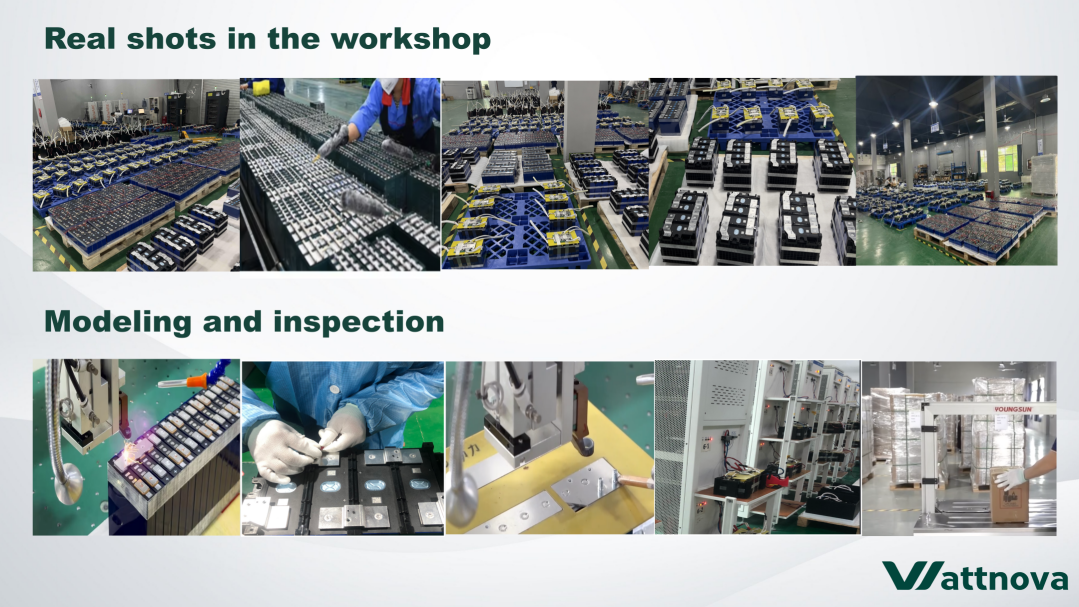
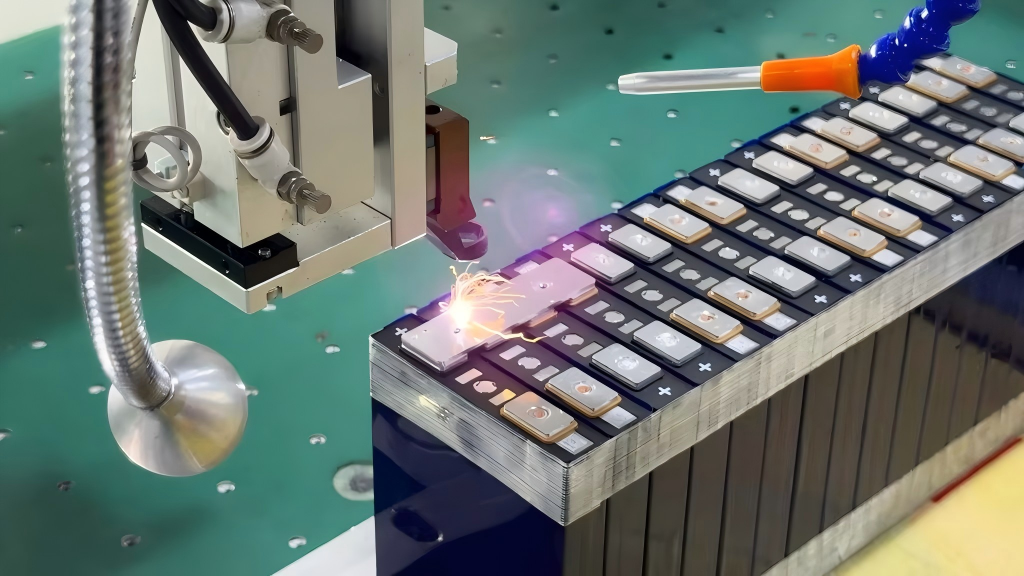
Laser Welding Technology
▸ High precision and consistency
▸ Strong bonding strength
▸ Lower resistance compared to traditional methods
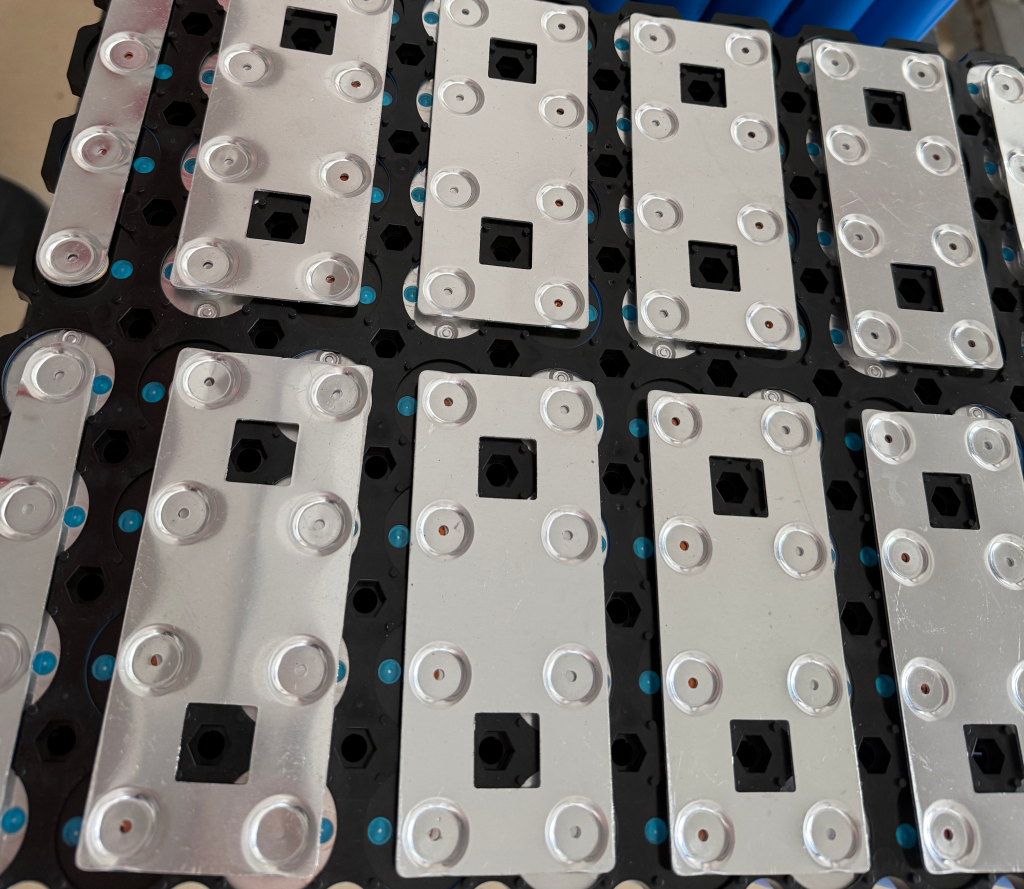
Reinforced Busbar Design
▸ Thick conductive materials
▸ Optimized current flow paths
▸ Reduced heat generation
Multi-Point Connection Strategy
▸ Redundancy in electrical paths
▸ Increased reliability under stress
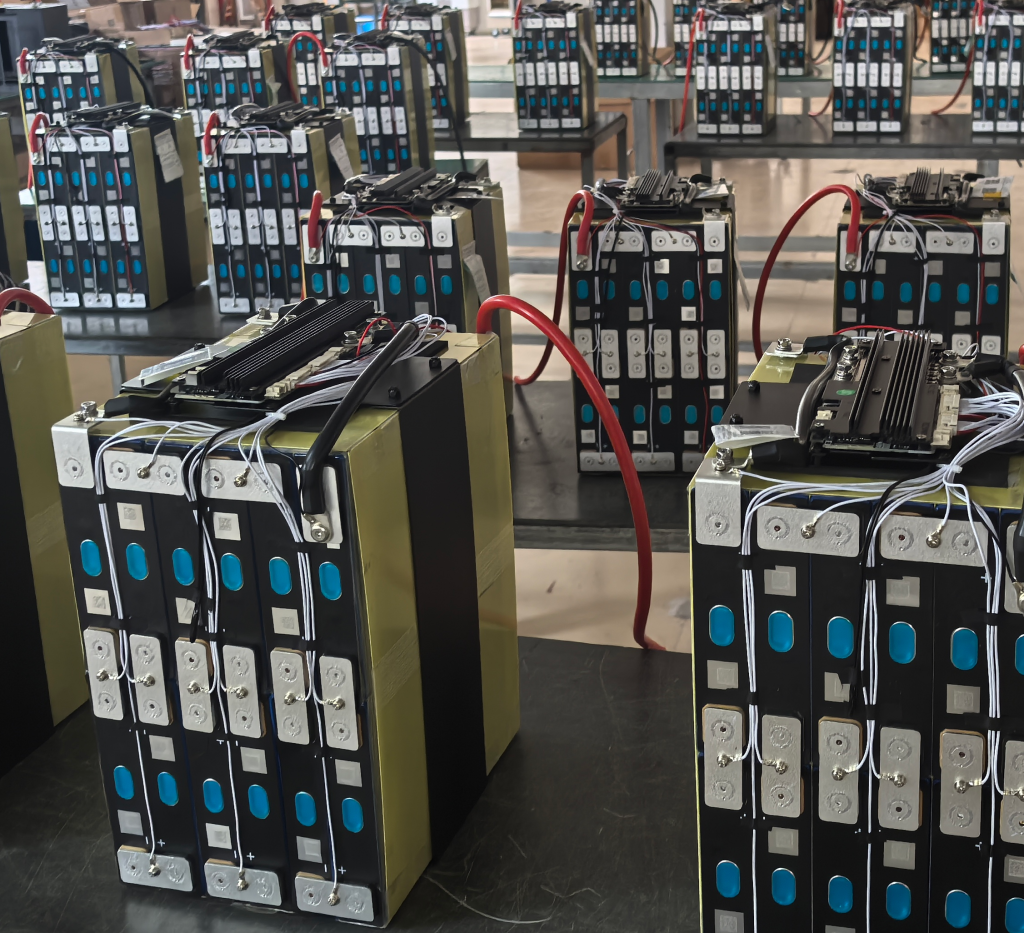
Chez Wattnova, we carefully design our internal structure to ensure that every connection point can withstand high current loads and long-term operation.
Why High-Rate Cells Require Even Better Welding
For applications such as véhicules électriques à basse vitesse, batteries are required to deliver:
✓ High discharge current
✓ Frequent start-stop cycles
✓ Strong acceleration loads
This places extreme stress not only on the cells—but also on the connections between them.
Using energy storage-grade cells (instead of power cells) or weak welding methods can result in:
▸ Voltage drop during acceleration
▸ Controller or motor malfunction
▸ Poor performance in cold environments
This is why Wattnova uses high-rate capable cells combined with industrial-grade welding processes, ensuring both performance and safety.
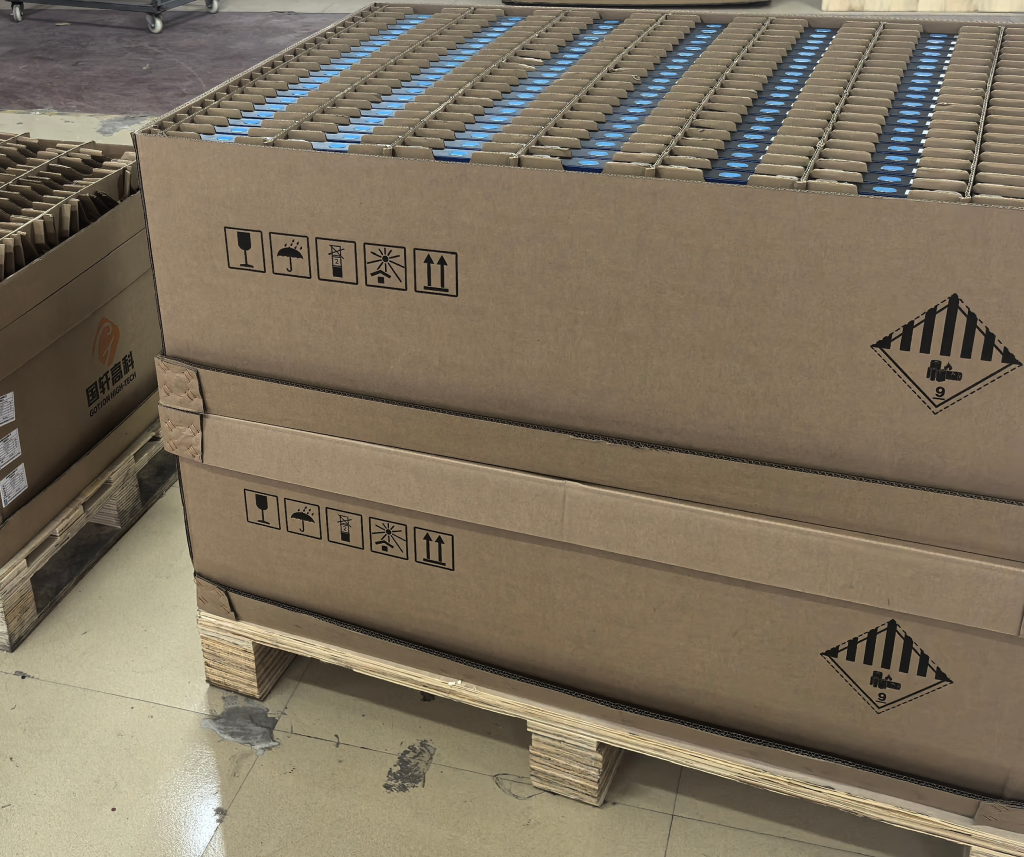
🛡️ Safety Is Not a Feature—It Is a System
A truly safe battery is not defined by a single component, but by a complete system design, y compris:
✓ High-quality cells
✓ Reliable BMS (Système de gestion de batterie)
✓ Strong mechanical structure
✓ Advanced welding and connection technology
Neglecting any of these elements compromises the entire system.
Wattnova’s Commitment to Safety
Chez Wattnova, we do not compete by offering the lowest price—we compete by delivering long-term reliability and safety.
Our approach includes:
✓ Strict cell selection for high-performance applications
✓ Scalable production with consistent welding quality
✓ Structural design optimized for vibration and load conditions
✓ Continuous improvement based on real-world use cases
Because we understand one thing clearly:
A battery is only as safe as its weakest internal connection.
Conclusion
As the demand for lithium battery systems continues to grow, buyers and integrators must look beyond surface specifications.
Understanding how a battery is built—especially how its cells are connected—is essential to ensuring safety, fiabilité, and long-term performance.
If you are selecting a battery for demanding applications, always ask:
💬 How are the cells connected—and can that connection handle real-world conditions?
Because in the end, safety is not visible from the outside—but it defines everything inside.
About Wattnova
Wattnova specializes in high-performance lithium battery solutions for off-grid systems, electric mobility, and industrial applications.
We focus on delivering sûr, fiable, and application-driven energy systems tailored for real-world challenges.
For more information, feel free to contact our team.