.png)
.png)
.png)


.png) Calculadoras
CalculadorasEurope’s Extreme Heatwaves Are Reshaping the Energy System
julio 7, 2026
How Lithium Battery Storage Is Becoming Critical Infrastructure
Recent years have seen a steady rise in the frequency and intensity of heatwaves across Europe. En 2026, multiple countries including France, España, Alemania, and Italy experienced temperatures exceeding 40°C, with certain regions approaching or surpassing 43°C. During these events, electricity demand surged and grid systems came under significant stress.
Against this backdrop, energy systems across Europe are undergoing a structural shift:
⚡ Peak electricity demand is rising
⚡ Renewable energy output is becoming more variable
⚡ Grid stability requirements are increasing
Lithium battery energy storage is emerging as a key enabling technology in this transition.
🔥 01. How Heatwaves Are Changing Energy Demand
Extreme heat is simultaneously reshaping both electricity consumption and grid operations.
① Rising Cooling Demand
Air conditioning and cooling systems drive sharp increases in peak electricity usage during heatwaves, often pushing grids close to operational limits.
② Grid Stress and Congestion
High temperatures reduce infrastructure efficiency while increasing transmission load, creating localized stress points across power networks.
③ Renewable Output Imbalance
Solar generation increases during hot sunny periods, but demand peaks often occur in the evening, creating a persistent timing mismatch.
⚡ 02. Why Lithium Battery Storage Becomes Essential
Lithium battery systems are increasingly positioned as the flexibility layer of modern power systems.
① Energy Time-Shifting Capability
Store excess solar energy during daytime and discharge it during peak demand periods.
② Peak Load Stabilization
Reduce stress on the grid by smoothing demand spikes during high-consumption hours.
③ Renewable Energy Utilization
Improve solar energy efficiency by reducing curtailment and increasing self-consumption rates.
④ System Resilience Enhancement
Provide stable backup and balancing power during extreme weather events and grid disturbances.
🔋 03. Wattnova Lithium Battery Energy Storage Solutions
Wattnova develops high-reliability lithium battery systems designed for demanding energy environments and real-world applications.
① High-Performance System Design
Engineered for long cycle life, stable output performance, and optimized energy efficiency across operational lifecycles.
② High-Temperature Adaptation Engineering
Designed to maintain stability under elevated temperature conditions commonly seen in European heatwaves, with enhanced thermal control and safety architecture.
③ Solar Energy Integration Capability
Enables seamless integration with photovoltaic systems, supporting energy self-sufficiency and reducing dependency on centralized grids.
④ Scalable Deployment Architecture
Supports phased adoption models from pilot-scale validation to full commercial deployment, with compliance-aligned expansion pathways.
🌞 04. Solar + Storage Synergy in Europe
Recent energy market developments in Europe highlight a growing imbalance between generation and consumption timing.
① Midday solar surplus increasingly occurs during peak production hours
② Evening demand remains structurally high
③ Negative pricing events are becoming more frequent in certain markets
In this context, battery storage plays a critical role in aligning renewable generation with real-world consumption patterns.
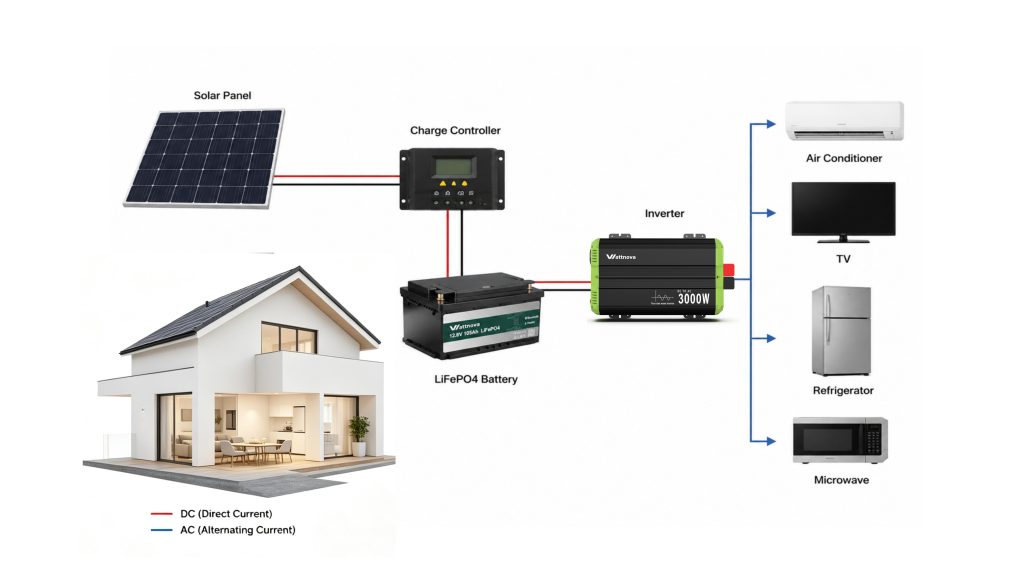
📊 05. Industry Transition: Storage Becomes Core Infrastructure
The European energy landscape is undergoing rapid transformation:
① Battery storage deployment is accelerating across major markets
② Renewable penetration continues to increase year over year
③ Grid flexibility investments are expanding across utilities
Sin embargo, structural constraints remain:
① Storage capacity is still insufficient relative to renewable growth
② Grid infrastructure expansion is lagging behind demand
③ Regional energy balancing challenges persist
Lithium battery storage is therefore transitioning from a supporting technology to core infrastructure.
🔌 06. System-Level Role of Lithium Batteries
Lithium battery systems are evolving from standalone devices into integrated energy infrastructure components.
① From backup power to grid flexibility engine
② From optional technology to essential infrastructure layer
③ From isolated applications to system-wide energy balancing assets
Their primary role is increasingly defined as a flexibility layer within the broader energy ecosystem.
🌍 Conclusion
Europe’s increasing exposure to extreme heatwaves is accelerating structural changes in its energy system. Rising peak demand, renewable variability, and grid congestion are collectively driving stronger demand for flexible energy storage solutions.
Lithium battery energy storage is becoming a key technology enabling this transition.
Through high-reliability lithium battery systems and energy storage solutions, Wattnova supports improved efficiency, stronger grid resilience, and more stable energy operations in modern energy environments.